

 English
 China
China Thailand
 Malaysia
 Vietnam
 Laos
Laos Cambodia
 Pilipinas
 Indonesia
 Russian
 Portuguese
 Arabic
 Japanese
 Spanish
 Italian
 French
 German
News
- Home
- News
- Company News
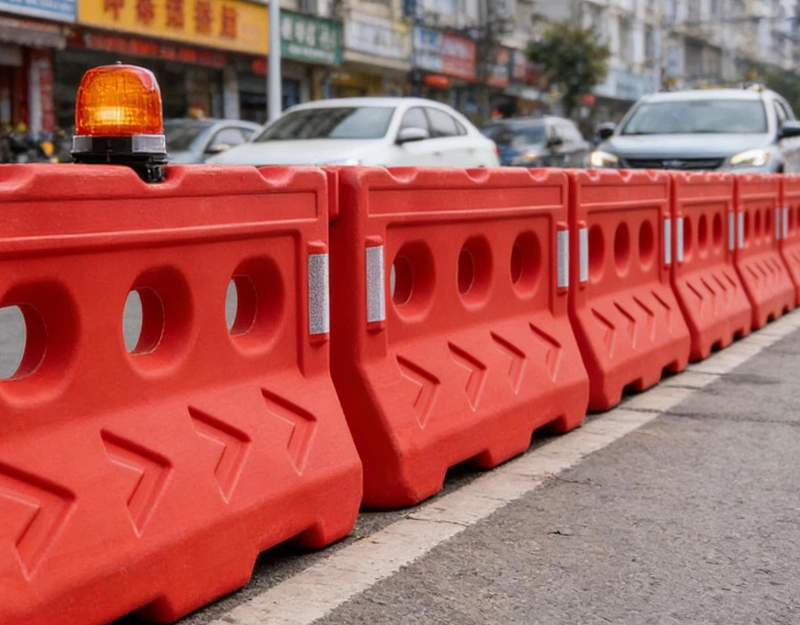
water filled traffic barriers have become increasingly popular in urban areas due to their flexibility, ease of use, and cost-effectiveness. These barriers, also known as water-filled jersey barriers or Plastic Water Barriers, are used to control traffic flow, protect pedestrians, and provide a temporary or semi-permanent solution for various urban infrastructure projects. This report aims to explore the cost-effectiveness of water filled traffic barriers in urban settings, highlighting their advantages and practical applications.
One of the primary factors contributing to the cost-effectiveness of water filled traffic barriers is their relatively low initial investment compared to traditional concrete barriers. The materials used in manufacturing these barriers, such as high-density polyethylene (HDPE), are generally less expensive than concrete. Additionally, the production process for plastic barriers is more efficient, leading to lower manufacturing costs. When considering the lifecycle costs, water filled traffic barriers offer significant savings. They require minimal maintenance, and their lightweight nature makes them easy to transport and install, reducing labor and transportation expenses. Furthermore, these barriers can be reused multiple times, extending their useful life and further lowering the overall cost per use.
Water filled traffic barriers are highly versatile and can be adapted to a wide range of urban environments and scenarios. Unlike permanent concrete barriers, which are fixed in place and difficult to move, Water Filled Barriers can be easily repositioned to accommodate changing traffic patterns or construction needs. This adaptability is particularly valuable in urban areas where road configurations and pedestrian flows can change frequently. For example, during special events or roadworks, these barriers can be quickly deployed to create temporary lanes, pedestrian walkways, or to cordon off work zones. The ability to fill and empty the barriers with water also allows for easy storage and transportation when not in use, making them an ideal solution for dynamic urban environments.
Ensuring the safety of both motorists and pedestrians is a top priority in urban areas. Water filled traffic barriers are designed to meet stringent safety standards and provide effective protection. When filled with water, these barriers become heavy and stable, capable of withstanding vehicle impacts and preventing unauthorized access. They are often tested and certified by relevant authorities, such as the American Association of State Highway and Transportation Officials (AASHTO) and the National Cooperative Highway Research Program (NCHRP). In addition to physical safety, these barriers also help in maintaining compliance with local regulations and guidelines. Urban planners and city officials can rely on water filled traffic barriers to ensure that their projects meet all necessary safety and legal requirements, thereby avoiding potential fines and liabilities.
The environmental impact of urban infrastructure projects is a growing concern, and water filled traffic barriers offer a more sustainable alternative to traditional barriers. The materials used in their construction, such as HDPE, are recyclable and have a lower carbon footprint compared to concrete. Additionally, the manufacturing process for plastic barriers requires less energy and produces fewer emissions. When the barriers reach the end of their useful life, they can be recycled, reducing waste and minimizing the environmental impact. Furthermore, the use of water as a filling material is environmentally friendly, as it is non-toxic and does not pose any risk to the surrounding ecosystem. This makes water filled traffic barriers a greener option for urban areas, aligning with the growing trend towards sustainable and eco-friendly solutions.
In conclusion, water filled traffic barriers offer a cost-effective, versatile, and safe solution for urban areas. Their low initial investment, combined with minimal lifecycle costs, makes them an economically viable option for a wide range of applications. The adaptability and ease of use of these barriers make them ideal for dynamic urban environments, while their compliance with safety standards ensures the protection of both motorists and pedestrians. Additionally, their environmental benefits, including recyclability and lower carbon footprint, make them a sustainable choice for urban infrastructure projects. As cities continue to grow and evolve, water filled traffic barriers will play an increasingly important role in ensuring the safety, efficiency, and sustainability of urban transportation systems.
Leave a Reply