

 English
 China
China Thailand
 Malaysia
 Vietnam
 Laos
Laos Cambodia
 Pilipinas
 Indonesia
 Russian
 Portuguese
 Arabic
 Japanese
 Spanish
 Italian
 French
 German
News
- Home
- News
- Company News
With the continuous advancement in traffic management and road safety, there has been a growing interest in exploring alternative solutions to traditional road barriers. One such innovation that has gained significant attention is the water filled traffic barrier. This report aims to compare these two types of barriers, focusing on their functionality, cost-effectiveness, environmental impact, ease of deployment, and overall effectiveness in enhancing road safety.
When it comes to the structural integrity and safety, both water filled traffic barriers and traditional road barriers serve as effective means to protect drivers and pedestrians from potential hazards. Traditional road barriers, often made from concrete or steel, are known for their robustness and durability. They can withstand substantial impacts, making them a reliable choice for high-traffic areas and highways. However, they also present certain limitations. For instance, their rigid structure can lead to more severe injuries in the event of a collision, as the force of the impact is not absorbed but rather redirected back to the vehicle and its occupants.
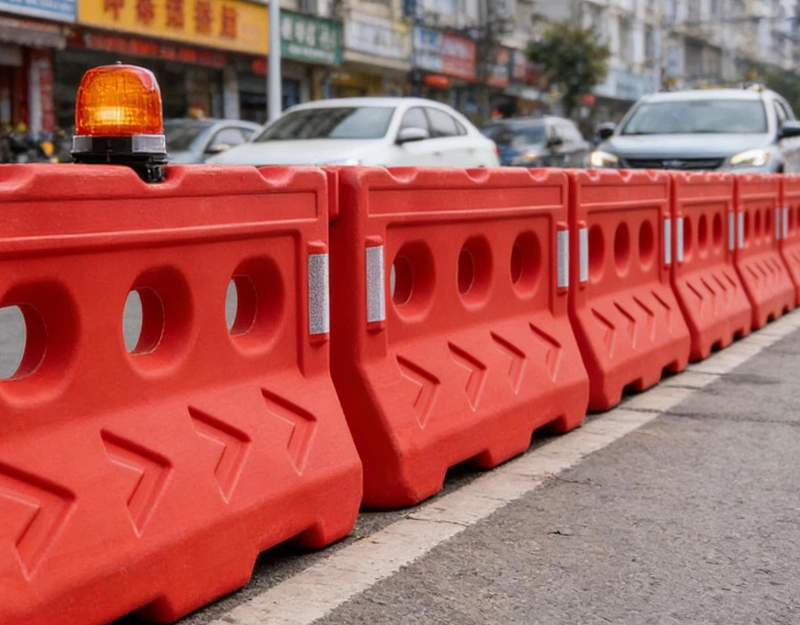
On the other hand, water filled traffic barriers offer a unique advantage in terms of safety. These barriers are designed with flexible plastic materials that, when filled with water, provide a buffer that can absorb and dissipate the energy from an impact. This feature significantly reduces the severity of accidents, minimizing the risk of serious injuries. Additionally, the water inside the barriers acts as a ballast, ensuring stability and preventing the barriers from being easily displaced by vehicles or strong winds. The flexibility of these barriers also allows them to deform upon impact, which helps to reduce the damage to the vehicle and the barrier itself, thus reducing maintenance costs over time.
Cost is a critical factor in any infrastructure project, and this is no different when choosing between water filled traffic barriers and traditional road barriers. Traditional barriers, while durable, come with higher initial costs due to the materials and labor required for installation. Concrete barriers, for example, need to be cast and transported, which can be expensive and logistically challenging. Steel barriers, although lighter and easier to transport, still require significant investment and specialized equipment for installation and maintenance.
In contrast, water filled traffic barriers are generally more cost-effective. The lightweight plastic material used in their construction makes them easy to transport and deploy, reducing transportation and labor costs. Moreover, these barriers do not require any special foundation, as they can be placed directly on the ground and filled with water once in position. This simplicity in setup also translates to lower installation costs. Furthermore, if the barriers need to be relocated, they can be easily drained, moved, and refilled, which is particularly advantageous for temporary roadworks or events where barriers may need to be frequently repositioned. Over the long term, the reduced maintenance and replacement costs associated with Water Filled Barriers contribute to their overall cost-effectiveness.
As sustainability becomes an increasingly important consideration in modern infrastructure projects, the environmental impact of road barriers is a key factor. Traditional barriers, especially those made from concrete, have a significant carbon footprint. The production of cement, a primary component of concrete, is a major source of CO2 emissions. Additionally, the extraction and processing of raw materials, as well as the energy-intensive manufacturing processes, contribute to the overall environmental impact. Steel barriers, while recyclable, also require substantial energy for production and recycling.
Water filled traffic barriers, on the other hand, are more environmentally friendly. The plastic used in their construction can be recycled, and the manufacturing process typically requires less energy compared to concrete or steel. Moreover, the use of water as a filler material is a sustainable choice, as it is a natural resource that can be easily sourced and reused. When the barriers reach the end of their lifespan, the water can be safely discharged, and the plastic can be recycled, reducing waste and minimizing the environmental impact. This makes water filled barriers a more sustainable option, aligning with the growing emphasis on green and eco-friendly infrastructure solutions.
One of the most significant advantages of water filled traffic barriers is their ease of deployment and flexibility. Traditional barriers, particularly concrete ones, are heavy and cumbersome, requiring specialized equipment and a considerable amount of time for installation. This can be a major drawback, especially in situations where quick setup is essential, such as during emergency road closures or temporary construction zones. The weight and rigidity of traditional barriers also make them difficult to relocate, which can be a limitation in dynamic traffic management scenarios.
Water filled traffic barriers, in contrast, are lightweight and easy to handle. They can be quickly deployed and set up by a small team, often without the need for heavy machinery. This makes them ideal for temporary applications, such as roadworks, events, and incident management. The ability to fill and drain the barriers with water allows for rapid adjustments and repositioning, providing greater flexibility in managing traffic flow and responding to changing conditions. This ease of deployment and flexibility is a significant benefit, particularly in urban areas where traffic patterns can change frequently and quickly.
Ultimately, the effectiveness of a road barrier in enhancing safety is the most crucial factor. Both traditional and water filled traffic barriers have their strengths, but the latter offers several advantages that make it a superior choice in many scenarios. The energy-absorbing properties of water filled barriers, combined with their flexibility and ease of deployment, make them highly effective in reducing the severity of accidents and improving overall road safety. Additionally, their cost-effectiveness and environmental sustainability add to their appeal, making them a more viable and responsible choice for modern traffic management.
While traditional barriers remain a reliable option for permanent installations, the adaptability and safety benefits of water filled traffic barriers make them a compelling alternative. As technology continues to evolve, it is likely that we will see further innovations in traffic barrier design, but for now, water filled barriers represent a significant step forward in creating safer, more efficient, and more sustainable roadways.


Leave a Reply