

 English
 China
China Thailand
 Malaysia
 Vietnam
 Laos
Laos Cambodia
 Pilipinas
 Indonesia
 Russian
 Portuguese
 Arabic
 Japanese
 Spanish
 Italian
 French
 German
News
- Home
- News
- Company News
The importance of maintaining high visibility on roads, especially during the night, cannot be overstated. Road delineators play a crucial role in enhancing nighttime visibility, contributing significantly to road safety. This report explores the various aspects of how road delineator posts contribute to safer driving conditions at night, examining their design, placement, and impact on driver behavior.
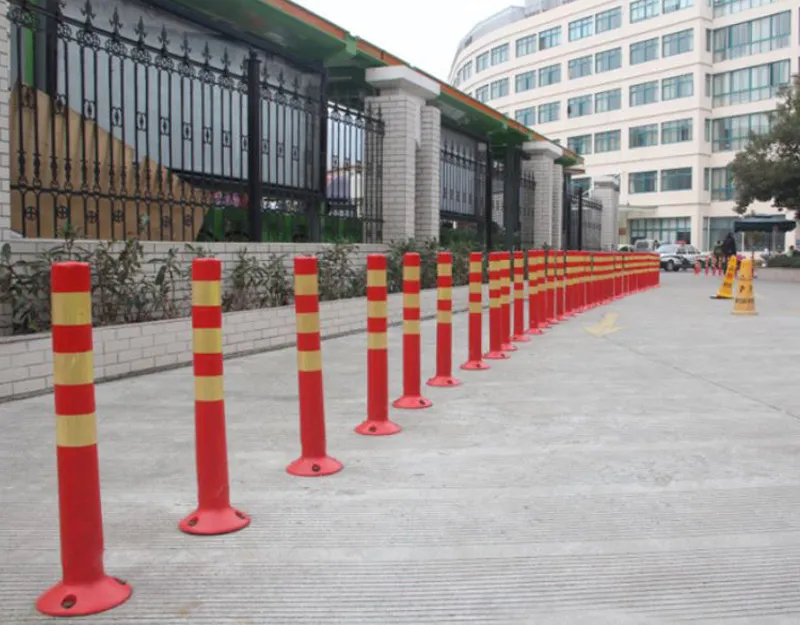
Road delineator posts are specifically designed to guide drivers and demarcate lanes or edges of roads, particularly in low-visibility conditions such as at night. These posts are typically made from durable materials that can withstand harsh weather and accidental impacts. The most common types include reflective or LED-illuminated designs, which greatly enhance their visibility under poor lighting conditions. Reflective road delineator posts use highly visible colors and reflective surfaces to bounce back light from vehicle headlights, ensuring that they are easily seen by drivers. On the other hand, LED-illuminated posts emit their own light, providing a consistent visual cue even when there is no direct illumination from an external source. Both types effectively increase the contrast between the delineator and its surroundings, making it easier for drivers to perceive the layout of the road ahead, thereby reducing the risk of accidents due to misjudgment of road boundaries.
The strategic placement of road delineator posts is critical to their effectiveness in enhancing nighttime visibility. Ideally, these posts should be placed at regular intervals along the roadside, with spacing determined by factors like the curvature of the road, speed limits, and the specific needs of the area. For example, on highways where speeds are higher, closer spacing may be necessary to provide continuous guidance to drivers. In urban areas, where street lighting might already be present, the need for illuminated delineators could be less, but reflective markers still play a vital role in clearly marking lane divisions and potential hazards. Additionally, placing road delineator posts at key points such as intersections, sharp turns, and areas prone to fog or heavy rain can further improve visibility and help prevent accidents. Proper placement not only aids in guiding traffic flow but also alerts drivers to upcoming changes in the road, allowing them more time to react appropriately.
The presence of well-placed and visible road delineator posts has been shown to positively influence driver behavior, leading to improved safety outcomes. Studies have demonstrated that drivers tend to reduce their speed and exercise greater caution when approaching sections marked with these posts, especially in areas with limited visibility. This behavioral change is attributed to the increased awareness provided by the delineators, which act as a psychological barrier, reminding drivers of the need to stay within their lane and maintain a safe distance from the edge of the road. Furthermore, the enhanced visibility offered by road delineator posts reduces the likelihood of drivers veering off course, a common cause of accidents in low-light conditions. By providing clear visual cues, these posts help mitigate the risks associated with night driving, ultimately contributing to a reduction in the number of crashes and fatalities on our roads.
While the primary focus of road delineator posts is on improving safety, their implementation also brings economic and environmental benefits. Economically, the reduction in accidents directly translates into lower costs related to emergency services, medical care, and property damage. Moreover, fewer disruptions to traffic flow mean less congestion and smoother travel, which can lead to savings in fuel consumption and reduced wear and tear on vehicles. From an environmental perspective, the use of solar-powered LED road delineator posts offers a sustainable solution for increasing visibility without relying on non-renewable energy sources. This not only helps in reducing the carbon footprint but also contributes to the overall goal of creating greener, more sustainable transportation systems. As such, investing in advanced road delineator technology represents a forward-thinking approach to addressing both immediate safety concerns and long-term sustainability goals.
In conclusion, road delineator posts are indispensable tools in the quest for safer roads, particularly during nighttime hours. Through their thoughtful design, strategic placement, and positive impact on driver behavior, these posts significantly reduce the risk of accidents and contribute to a more secure driving environment. As technology continues to evolve, we can expect to see even more innovative solutions that build upon the foundational principles of current road delineator systems. Future advancements, such as smart delineators integrated with real-time data and adaptive lighting, hold the promise of further enhancing road safety while minimizing environmental impact. By continuing to invest in and improve upon these technologies, society can look forward to a future where nighttime driving is not only safer but also more efficient and environmentally friendly.







Leave a Reply